
The Dixie Cup: Famous Faces Under The Lid
For nearly a quarter century, the underside of a Dixie ice cream lid held a full-color portrait of a Hollywood star, a cowboy hero or a battleship, and children bought another cup to find the next one.
Dixie Cup picture lids, 1930 to 1954
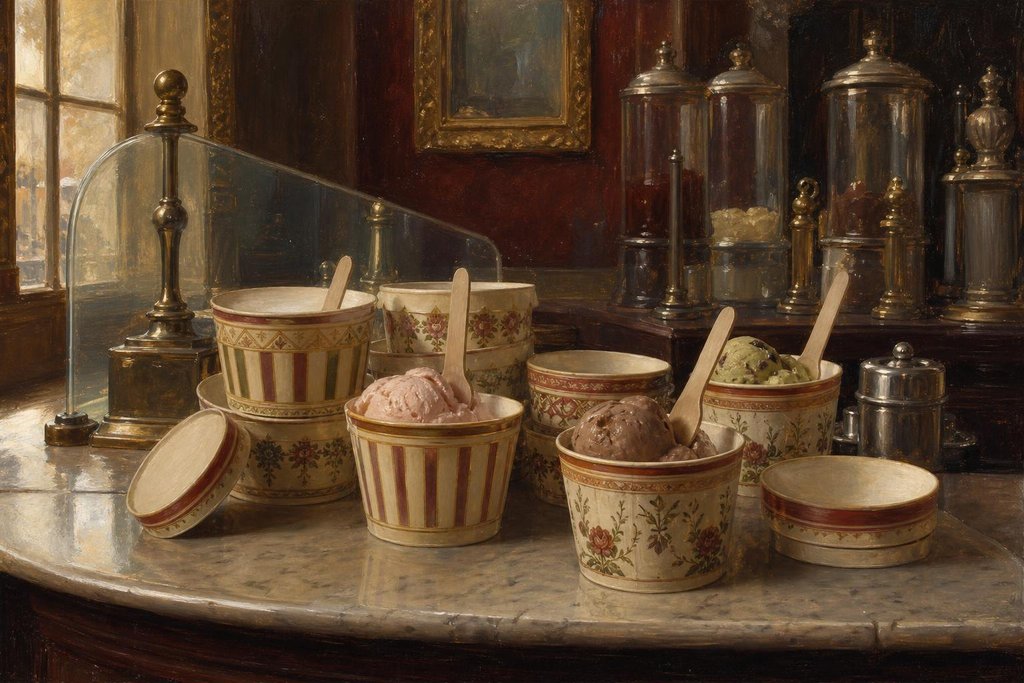
Americans who grew up before the mid-1950s tend to remember the Dixie Cup picture lids that turned up all over the country from 1930 to 1954. They remember the ice cream too, since the colorful circles came on top of small, neatly covered cups of it, usually eaten with a flat wooden spoon.
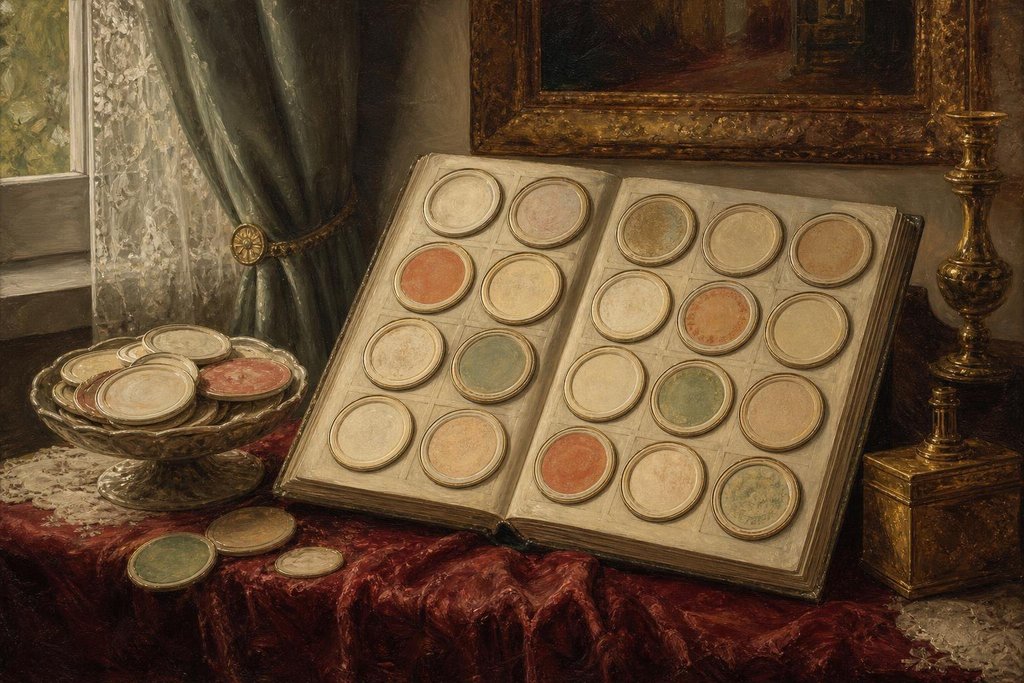
The idea was simple. A thin paper disk under the lid kept the picture away from the ice cream, and once a child had finished, the lid could be licked clean and saved. Over the years the subjects followed what children cared about, from the circus and the movies to the war and baseball.
Dixie lids are most often associated with Hollywood and cowboy movie stars. Those series were so popular that they appeared every year without a break from 1933 until the end. The standard run was 24 lids a year, mostly in two sizes, 2.25 inches and 2.75 inches across. Each year brought a new group of stars against a different background color, and any star repeated from an earlier year was shown in a new pose.
Circus animals, nature lids and the 1931 presidents set
The very first Dixie lids pictured circus animals and performers in full color, linked to the Dixie circus radio stories of 1930, and that series lasted two years. The next group, which appeared in 1932, was called “The Nature Series” and showed dogs, birds, fish and butterflies.
In 1931 a special set of U.S. president lids was made only for the Philadelphia Dairy Products Company. It was probably meant to promote the company’s high-quality Aristocrat brand of ice cream and to give children something educational to collect.
How MGM put Hollywood stars on Dixie lids in 1933
It soon became clear to Dixie’s management that new subjects were needed to keep children interested, and the company decided on movie stars. It approached the biggest studio of the day, Metro-Goldwyn-Mayer, and MGM gave Dixie permission to use the images of 24 stars at no cost. That arrangement gave Dixie a near monopoly in the small-portion ice cream trade for close to 25 years.
The 24 stars of the 1933 series were John Barrymore, Lionel Barrymore, Wallace Beery, Jackie Cooper, Joan Crawford, Marion Davies, Marie Dressler, Jimmy Durante, Madge Evans, Clark Gable, Greta Garbo, William Haines, Jean Harlow, Helen Hayes, Phillips Holmes, Walter Huston, Myrna Loy, Robert Montgomery, Dickie Moore, Conrad Nagel, Ramon Novarro, Maureen O’Sullivan, Norma Shearer and Lewis Stone. These early lids were printed in black and white with the words “Who Plays In,” followed by a list of the star’s films. Lionel Barrymore, Clark Gable, Jean Harlow, Myrna Loy and Robert Montgomery each had four titles listed, the most in the set. Other Hollywood studios joined from 1934 on.
Movie studios of the period kept large portrait departments to supply publicity stills, and those golden age Hollywood portraits are a collecting field of their own. On a Dixie lid, the star had to read clearly on a circle a couple of inches wide.
Some famous names never made it. No lid ever referred to Gone With the Wind or The Wizard of Oz, two of the most popular films in history, and Shirley Temple never appeared on a Dixie lid.
Roy Rogers, Bing Crosby and the Mystery Lid
The first cowboy lid came in the 1934 series, a profile of Ken Maynard. The king of the cowboy lids, though, was Roy Rogers, whose likeness appeared 12 times. Western star Wild Bill Elliott matched that number, but some of his appearances were shared with other cowboys, so Rogers held the solo record.
Among other Hollywood names, the leading repeaters were Bing Crosby with 11 appearances and Johnny Mack Brown with 10. The actresses who appeared most often were Ginger Rogers and Betty Grable, with six each.
Also in 1934, Dixie issued the “Mystery Lid.” The star’s face was blanked out, leaving a silhouette for the buyer to identify. The only way to find the answer was to buy more Dixie cups, which was the point.
War lids, baseball portraits and the 3D lids of 1954
Apart from a few radio stars in 1936 and some athletes in 1937 and 1938, the 24-movie-star format held until 1941. That year brought the first of four wartime supplemental issues, “Defend America.” “America’s Fighting Forces” followed in 1942, and both sets showed tanks, planes, warships and other military hardware. The first combat scenes appeared in 1943 as “America Attacks,” and a final action-packed set of 24, “United Nations Attacks,” closed out the war theme.
The next supplemental issue was a set of 24 baseball portraits in 1952 and 1953. Some television stars were added to the Hollywood series in those years, but the total stayed at 24. The 1952 baseball lids came out late in the year because Dixie had trouble dealing with 16 ball clubs that lacked publicity departments and good photographs. Collectors of baseball memorabilia look for them as well as lid collectors.
In the final year, 1954, only 18 movie and television stars were issued, but they were printed in full-color 3D, in left and right action poses for use in stereo card viewers. Each star needed two lids, so 36 were actually produced. The 18 baseball lids that year were in the same 3D action format, but in a dull brownish tone.
Dixie lid values in 2000 and the competing picture lids
In 2000 a common lid in excellent condition was valued at about $2 to $3. A vintage, rare or popular lid, such as those of Lucy and Desi, John Wayne or Hopalong Cassidy, brought $25 and up depending on quality and age. The whole 1952 baseball series was rare, with values approaching $100 in excellent condition. Condition matters a great deal with a paper item that sat on ice cream and was often licked and pocketed.
Dixie, which by 2000 was owned by James River Co., dominated the cup trade with its patented picture program, but competitors issued picture lids too. The Kalix Cup Co. made two sizes of “Our Gang” lids in the 1930s showing Spanky, Alfalfa and the rest. Skippy lids appeared around the same time, with drawings on top and a blank underside.
The Lily Tulip Company got around the Dixie patent, which covered only the thin paper separating the picture from the ice cream, with a double-fold lid. One of its four sides was left blank and faced the ice cream, so no paper was needed. In the late 1930s or early 1940s Lily issued a series of 26 lids, “Famous American Shrines,” showing landmarks such as the Statue of Liberty, the Alamo, Independence Hall, Plymouth Rock and the Betsy Ross house. Each carried a short description and could be folded into a 3D stand-up.
After 1954 the picture lids ended, and the underside of an ice cream cup lid has stayed blank ever since. Collectors interested in other American treats of the period may also enjoy the story of when soda pop was invented.
Questions and answers
When did Dixie Cup ice cream lids have pictures?
Dixie ice cream cups carried picture lids from 1930 to 1954. The first showed circus animals and performers tied to the Dixie circus radio stories of 1930, followed by a nature series in 1932 and Hollywood stars every year from 1933. The last lids, in 1954, were printed in 3D for stereo viewers.
Which movie stars were on Dixie Cup lids?
The first 1933 star set came from MGM and included Clark Gable, Greta Garbo, Jean Harlow, Joan Crawford, Myrna Loy and Norma Shearer. Roy Rogers appeared 12 times, Bing Crosby 11 and Johnny Mack Brown 10, while Ginger Rogers and Betty Grable led the actresses with six each. Shirley Temple never appeared.
How much were old Dixie Cup lids worth?
In 2000, a common Dixie lid in excellent condition was valued at about $2 to $3. Rare or popular lids, such as Lucy and Desi, John Wayne or Hopalong Cassidy, brought $25 and up depending on quality and vintage, and the scarce 1952 baseball lids approached $100 in excellent condition.
Why were ice cream cups with lids so collectible?
Each Dixie lid had a picture on its underside, protected from the ice cream by a thin paper disk, and a new set of 24 subjects appeared every year in a new background color. Series like the 1934 Mystery Lid, with the star’s face blanked out, encouraged children to keep buying cups to complete or solve a set.
Did other companies make picture lids besides Dixie?
Yes. The Kalix Cup Co. made Our Gang lids in the 1930s, and Skippy lids had drawings on top. The Lily Tulip Company used a double-fold lid to get around the Dixie patent and issued 26 Famous American Shrines lids showing landmarks like the Alamo and the Statue of Liberty, each foldable into a stand-up.