AI notice: AI-generated images and AI-assisted texts on Go-Star
The site uses AI tools in three places: every picture is generated, the texts are drafted with AI support and then checked by a person, and the layout code was written with AI help. This notice explains each one and how it is labelled.
AI-generated images
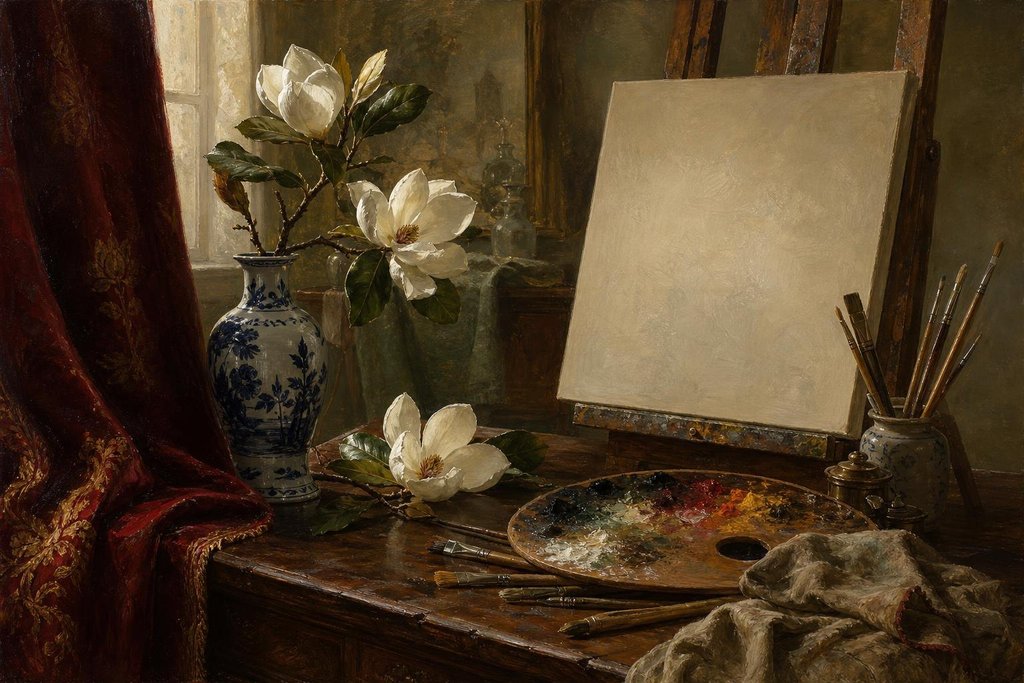
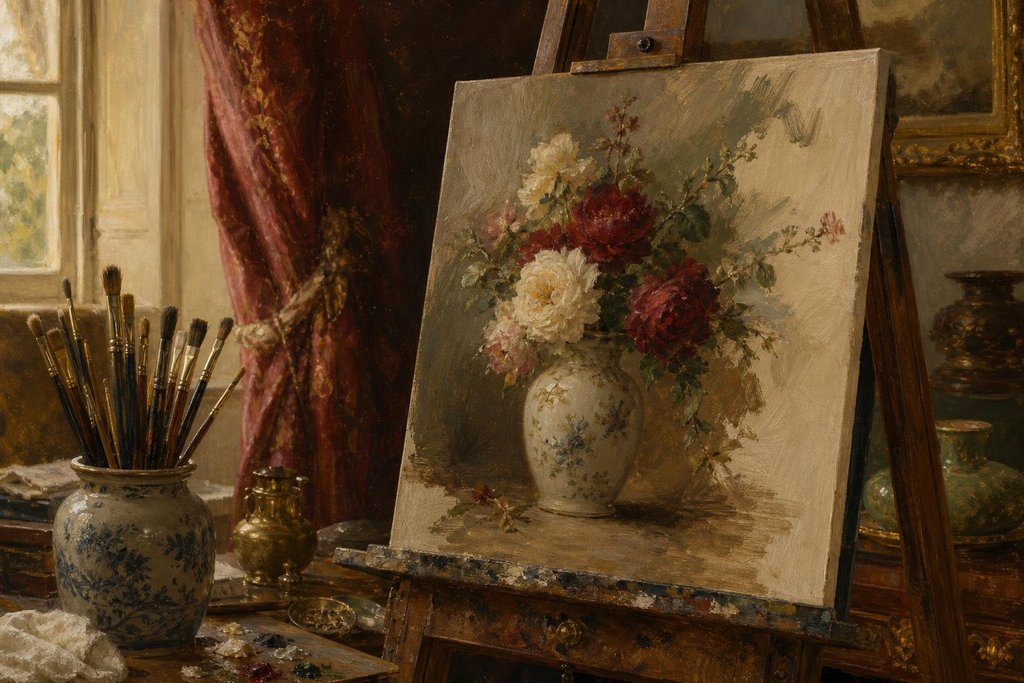
Every picture on Go-Star Antiquing & Collecting was created with AI image tools. The pictures are painted, imagined views of the kinds of objects, rooms and places the articles describe: porcelain on a mantel, a cabinet of glass, a garage of early cars, a quiet library table. They are not photographs of any real collection, object, house or sale, and they never show the real people named in the articles.
Each picture starts as a written description prepared by the editors: the objects, the setting and the palette, together with the rule that the image must contain no lettering, no logos and no recognizable person. All of the pictures share one style, close to a nineteenth-century still life or interior painting, so the pages look consistent from one article to the next.
The ornamental gilt frame and the magnolia branches around the picture on the home page are decorative graphics made with the same tools.
How each AI image is labelled
A painted image of a real kind of object can be mistaken for a photograph or for a period painting of an authentic piece. For that reason every picture on the site is labelled, in three places at once. Directly under the picture there is an “AI” badge followed by the words “AI-generated image”. The alternative text of the image, which screen readers announce and search engines read, ends with “(AI-generated image)”. And every image file carries the machine-readable IPTC marker for content made by a trained algorithm, so the information travels with the file if it is copied.
The site does not alter or remove provenance markings. Because no picture shows a real object, none of them should be used to identify a mark, a maker or a piece; the articles do that in words, with the facts and dates they give.
AI-assisted texts and editorial responsibility
The editors use AI tools to support research and drafting. Every published text is reviewed by a person for substance and checked for facts: names and their spelling, years, places, makers and marks, and every sale price with its date. Where sources disagree or a detail cannot be confirmed, it is left out. Prices on the site are historical records, not appraisals or offers.
Editorially responsible for the texts and images on this site: Ellen Hartwell, editor, [email protected]. The about page explains how the articles are dated and checked, and the contact page explains how to report an error, which is the quickest way to get a mistake corrected.
Code and design
The layout, styles and the small browser script of the site were written with the help of AI coding tools and reviewed by a person before publication. The script only opens the menu, expands answers and adds visual effects; it collects no data, as the privacy notice describes.
Why the site discloses its use of AI
Readers of a collecting site need to know what they are looking at. A photograph suggests that an object existed and looked a certain way; an imagined painting does not, and the label makes the difference plain at a glance. The same applies to text: knowing that a person checked the facts, and who answers for them, tells a reader how far to trust a page.
The labels also follow the transparency rules for AI-generated content set out in Article 50 of the European Union’s AI Act, which asks that generated images be marked as such and that someone hold editorial responsibility for AI-assisted text. The site applies the same practice to every page, wherever its readers are.
Questions and answers
Are the images on Go-Star real photographs?
No. Every image on the site is AI-generated: an imagined painting of the kind of object or place an article describes. None shows a real collection, a real sale or a real person. Each one carries an AI badge and the words AI-generated image under the picture, the same label in its alt text, and an IPTC marker in the file.
Is the text on Go-Star written by AI?
AI tools support research and drafting, but every published text is reviewed by a person for substance and checked for facts, including names, years, marks and dated prices. Editorial responsibility for the texts and images lies with Ellen Hartwell, editor, who can be reached at [email protected].
Can an AI image on the site help identify my antique?
No. The pictures are illustrations, not records of real objects, so marks, shapes and colors in them should not be compared with a real piece. The collecting guides describe marks, makers and construction in words, and those descriptions are the part of each article that has been checked.
How do I report an error in an AI-assisted article?
Write to [email protected] with the page address, the sentence that is wrong and the correct information with its source. The editors check each correction against a source before the page is changed. The contact page lists what else helps a correction move quickly.