Antique Detective: Identifying Antique Marks, Fakes and Dates

Most antiques carry the evidence of their age somewhere: in a backstamp, a saw mark, a worn stretcher or a rider’s costume. Reading those clues is how collectors identify antiques, date them and catch reproductions.
How to identify antiques: start with the clues
Identifying an antique is detective work. Anyone who sets out to identify antiques soon finds that the object rarely comes with papers, and the story attached to it, from a seller or a family, is often wrong in the details. What can be trusted is the evidence on the piece: its marks, its style, its materials, how it was made and where it shows wear. Each clue narrows the possibilities, and a single clue that does not fit the story is often the one that matters.
This page gathers the methods that come up again and again in the site’s guides: reading antique marks on porcelain and glass, looking for honest wear on furniture, spotting married pieces and later alterations, and dating an object from details its maker never intended as evidence. The guides linked below go deeper on each material.
Reading antique marks on porcelain
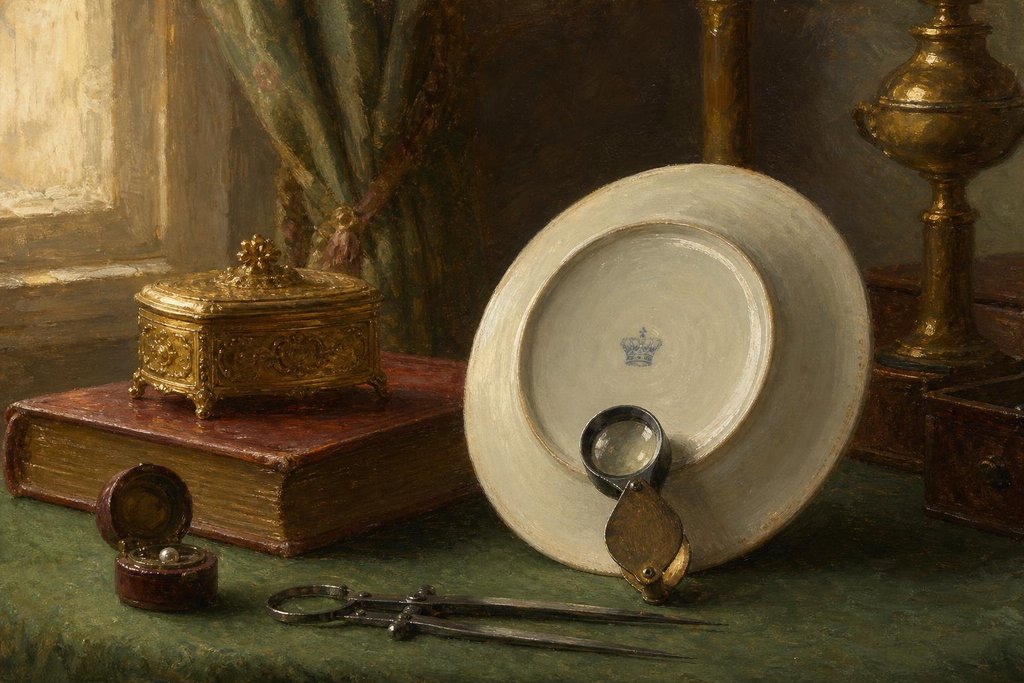
A backstamp is supposed to tell you who made a piece and when, but marks are copied as readily as the wares they sit on. Fake or Real? Tell-tale Signs on Reproduction Porcelain sets out the warning signs. New marks printed by industrial ink-jet printers are very sharp and clear. A hand-drawn mark that resembles familiar Meissen or Sevres marks but looks a bit too embellished is probably a fake, and a mark shown with an old date or a model number is probably recent. Signs of aging should be examined too, because they can be faked as well.
Some factories make dating easier because their marks changed in known stages. Royal Bayreuth began with a blue cursive “T,” moved to a rampant lion holding a “T” shield, used both blue and green marks between 1887 and 1902, and after 1900 adopted two lions with a banner reading “Royal Bayreuth,” “Bavaria” and “Priv. 1794.” Even there, the guide warns, marks changed slightly with each new director, and the factory tended to use whatever was on hand.
Limoges is harder: more than 48 factories used over 400 known marks. A piece of Haviland dinnerware carries two, an underglaze factory mark and an overglaze decorating mark, and the difference between them tells you where it was made and where it was decorated.
Glass fakes: tests, seals and reused molds
Glass offers its own clues. Vaseline glass contains uranium and glows a bright neon green under a UV blacklight, so a pocket blacklight settles whether a yellow-green piece is the real thing. Silvered mercury glass is easy to recognize by its mirror surface, but the rare English pieces marked “Varnish” or “Thomson” come from a short run between 1849 and 1855, and pieces with their original seal are usually priced higher than those without.
Molds can mislead. The Lancaster Glass Co. was absorbed by Hocking, which used many of Lancaster’s molds for its own lines through the 1940s, ’50s and ’60s. A pattern alone, then, does not always prove a maker or a decade. Pattern names can shift too: Lancaster’s Decoration #203, marketed as “Patrician,” is known to collectors as “Patrick” after a 1974 reference book renamed it.
Furniture: wear, married pieces and saw marks
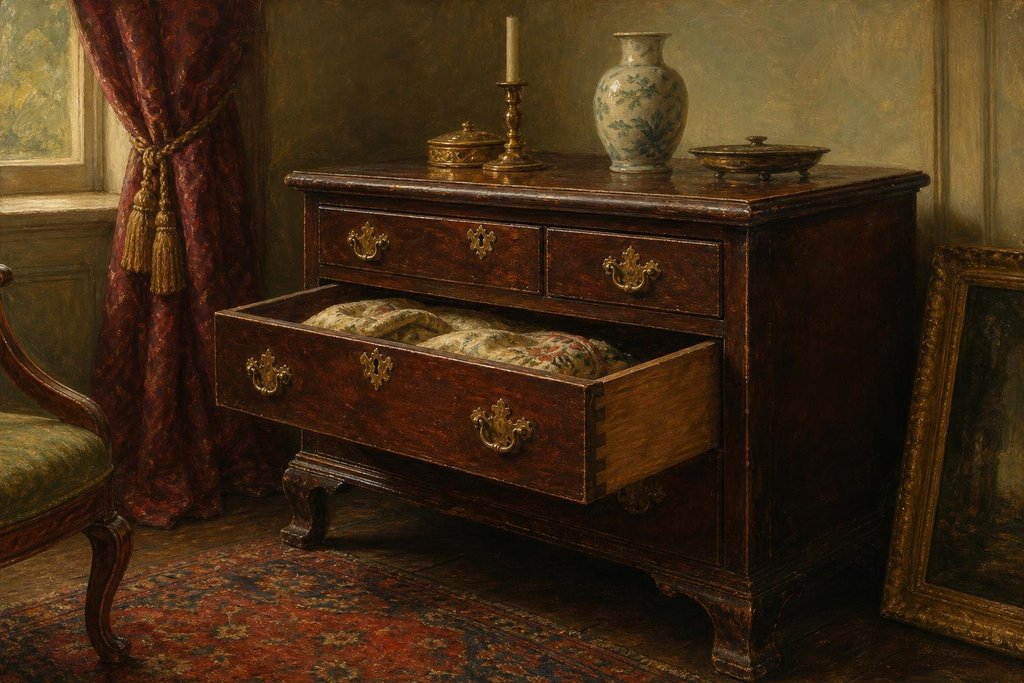
Antique English furniture shows how much a careful look can reveal. Fine 18th-century pieces have been reproduced continuously since the 19th century, especially small Georgian lowboys, then chests of drawers, Pembroke tables and chairs. Look for wear where people actually touched the piece. A chair should show wear on the arms and stretchers, scratches and some discoloring on the feet from being dragged, and discoloration on the top rail from generations of hands lifting it.
Style comes next. A combination of styles can point to a reproduction or a revival piece. Around the turn of the 20th century, when wealthy Americans bought anything that looked like Queen Anne or Georgian furniture, a common trick was to add faked, heavily carved legs to an old chair. A “married piece,” usually a highboy, chest or bookcase desk assembled from parts of different pieces, is often passed off at a high price. Buying online makes this harder, because there is no hands-on examination: you cannot see whether the brasses are original or look inside a drawer. Any major alteration or replacement should lower the price, and color differences in the wood can point to restoration.
Construction settles many questions. Circular saw marks indicate a 19th-century piece, while 18th-century marks should be cross-hatched. Secondary woods, used where they cannot be seen, help identify the country of origin: fruitwood interiors were used in European pieces but not in England. Feel under drawers and across the backs of pieces meant to stand against a wall. In the 18th and early 19th centuries they were left rough.
Clues that date an antique, hiding in plain sight
Sometimes the date is in the details. A late 19th-century German pottery vase with a transfer print of a mother and child carried no maker’s mark at all, only the number “9882” on the bottom, which referred to the mold. Many inexpensive pieces from those factories were never marked. A copper horse-and-jockey weather vane, hoped to show Seabiscuit, turned out to depict the 19th-century racehorse Dexter; the clue was the rider’s long pants instead of the boots later jockeys wore.
Labels and initials help too. A set of Windsor chairs engraved “C.B.” came from the Conant Ball Furniture Company, which made Colonial reproductions from the late 19th century until it closed in 1980, so the chairs were early 20th century, not 18th. A calendar plate marked “The D.E. McNicol Pottery Co, East Liverpool, OH” and dated 1914 fits the years when such plates were popular, 1906 to 1926. Collectors of chintz rely on pattern names and maker’s backstamps in the same way, since imitations and damaged pieces are on the market. No single clue is enough on its own; to identify antiques with confidence, collectors look for several that agree.
Related reading
Questions and answers
How do you identify antique marks on porcelain?
Compare the mark with documented examples for the factory and period. Be wary of marks that are very sharp and clear, since new marks are printed by industrial ink-jet printers, of hand-drawn marks that look too embellished, and of marks shown with an old date or a model number. For factories such as Royal Bayreuth, the style and color of the mark help date the piece.
How can you identify antiques from reproductions in furniture?
Look for wear where hands and floors touched the piece: chair arms, stretchers, feet and top rails. Check for mixed styles, replaced or added legs and married pieces built from parts. Study the saw marks, since circular saw marks point to the 19th century, and the secondary woods, which help show the country of origin. Undersides of 18th-century drawers were left rough.
What does a number on the bottom of an antique mean?
A number on the bottom is often a mold number rather than a date or a maker’s mark. A late 19th-century German transfer-printed pottery vase marked only “9882” carried its mold number, and many inexpensive pieces from such factories were never marked at all. A number shown alongside a familiar factory mark can also suggest a recent reproduction.
What is a married piece of furniture?
A married piece is assembled from parts of two or more different pieces and sold as one original, often for a hefty price. It happens most often with highboys, chests and bookcase desks. Check whether the brasses are original, examine the inside of the drawers and the saw marks, and watch for color differences that point to restoration. Any major alteration or replacement should lower the price.
Can a blacklight help identify antique glass?
Yes, for Vaseline glass. Because it is colored with uranium, genuine Vaseline glass glows a bright neon green under an ultraviolet blacklight, which lets collectors confirm a yellow-green piece before buying it. Riedel also made a bright green uranium glass, Annagrun, that reacts the same way. Other types of glass need other checks, such as marks, seals and pattern names.