Antiques and Collectibles: Porcelain, Glass, Pottery and Celebrity Collections
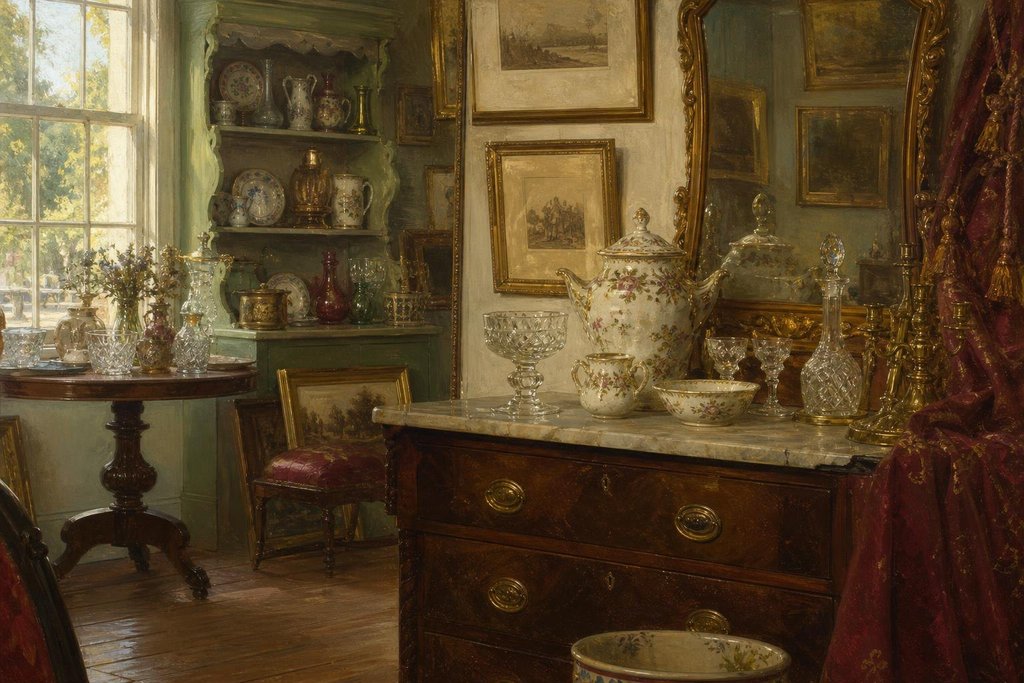

The antiques section gathers collecting guides by material, profiles of famous collectors and the long-running rubrics on marks, eBay sales and Civil War relics, each with the facts and dated sale results collectors look for.
How the antiques section is organized
The section on antiques and collectibles is arranged two ways at once: by material and by rubric. The material guides take one kind of object, such as Limoges porcelain, poison bottles or railroad pocket watches, and explain how it was made, how the marks work and what separates a good piece from a copy. The rubrics are recurring formats with their own entrance pages.
Antique Detective deals with marks, fakes and dating. Ask the Civil War Collector covers relics, letters and the authenticity questions that come with them. What’s Selling on eBay reads past online auction results item by item. The Celebrity Collector profiles actors and entertainers through the things they collect, and painters have their own section under Art & Artists. Every article, grouped by rubric, is listed in the full article index, along with the antiques and collectibles guides that sit outside the rubrics.
Porcelain and glass guides
Porcelain is the deepest shelf. Royal Bayreuth covers the Tettau factory’s hand-painted novelty wares and the way its marks changed from a blue cursive “T” to a pair of rampant lions. Collecting Limoges traces porcelain from Chinese kaolin to Johann Friedrich Bottger’s work in Germany in 1708 and on to the French factories, including Haviland, whose dinnerware carries both an underglaze factory mark and an overglaze decorating mark. Paris porcelain boxes picks up the story from the mid-18th century, when porcelain making was perfected in Europe and society took to small painted boxes.
Two guides concentrate on reproduction and value. Fake or Real? Tell-tale Signs on Reproduction Porcelain compares authentic Meissen marks with recent Chinese copies. The chintz guide covers the colorful earthenware made from the 1920s to the late 1960s and named after the printed cotton of 17th-century India; at one collectors’ convention auction in Florida, a unique Royal Winton “Julia” teapot brought $4,200.
The glass guides read like detective work. Vaseline glass glows under a blacklight because of the uranium in it. Silvered mercury glass was blown double-walled and silvered between the layers, first around 1840 in Bohemia; English examples marked “Varnish” or “Thomson” come from a short run between 1849 and 1855. The Lancaster Glass Co. was founded in Lancaster, Ohio, in July 1908 by Lucien B. Martin and his son, and Hocking took controlling interest in 1924.
Bottles, soda and folk art in sand
Bottle collectors can start with poison bottles, made in cobalt blue, amber, black and green with ridges, hobnails and embossed warnings so no one would mistake them in a dark cupboard. The Codd bottle sealed its soda with a marble held in the neck by the pressure of the gas, an idea Hiram Codd had in 1872. When Was Soda Pop Invented? follows carbonated water from Joseph Priestley to the druggists who bottled it in America.
Bottles turn up in folk art as well. Cowan’s Corner tells the story of Andrew Clemens, born in Dubuque, Iowa, in 1857, who lost his hearing and speech at the age of five and went on to fill glass bottles with pictures made of the colored sands of Iowa’s Pictured Rocks region, using tools he made himself.
Southern pottery and a great American house
Collecting Southern Stoneware is written from a dealer’s point of view. It sets out practical rules of thumb, older being better among them, and explains why Edgefield, where the alkaline-glazed Southern tradition began, has collectors almost everywhere, while Catawba Valley and Crawford County pottery draw more regional followings. Burlon Craig’s early face jugs and the poem-inscribed wares of the enslaved potter Dave both get their due.
For furniture, paintings, porcelain and silver in their original setting, The Antiques of the Biltmore Estate tours George Washington Vanderbilt’s house in Asheville, North Carolina, opened on Christmas Eve 1895, with its bowling alley, indoor swimming pool and 43 bathrooms.
Watches, puzzle boxes and other small collectibles
A Matter of Time runs from the first portable clocks of the 1500s to American pocket watches. Waltham made the first mass-produced watches with interchangeable parts, and the railroad watch standards were set after a wreck at Kipton, Ohio, in 1891. Japanese puzzle boxes describes the sliding-panel boxes Japan has exported since before 1870 and the wood mosaic craft used to decorate them.
Some of the most charming objects are the smallest. Hair receivers, identified by a finger-wide hole in the lid, were made in glass, porcelain and later celluloid, with examples from RS Prussia and from Japanese makers such as Nippon and Kutani. Dixie Cup lids, the picture lids on ice cream cups from 1930 to 1954, usually came 24 to a year, mostly film and cowboy stars.
Sports memorabilia, Hollywood photographs and famous paintings
Collecting Baseball Memorabilia starts at Cooperstown the day after the 1998 Hall of Fame induction and moves into grading, autographs and auctions. The Honus Wagner card, the T206 tobacco card called the Mona Lisa of baseball cards, sold on eBay for $1.1 million plus a $165,000 buyer’s premium.
The golden age of celebrity photos explains the difference between the 8-by-10-inch studio stills printed by the thousands and the larger portraits made in limited numbers. Famous Antiques follows Paul Gauguin’s Fruits on a Table, painted in 1889, stolen in London in 1970 and later bought at a Turin railway auction by a Fiat factory worker for about $25.
The Celebrity Collector
The collector profiles are the heart of the section. Jay Leno kept about 80 cars and 80 motorcycles. William Randolph Hearst filled San Simeon with Spanish and Italian antiques. Cliff Robertson flew the vintage aircraft he owned, and Nicolas Cage sold 141 lots of comic books through Heritage Comics of Dallas for $1.68 million. Mike Wolfe of American Pickers talked about pitching his show for five years before the History Channel bought it.
Collecting Guides
Famous Antiques, eBay and More
The Celebrity Collector
Questions and answers
What kinds of antiques and collectibles are covered?
The section covers porcelain and glass, including Royal Bayreuth, Limoges, chintz, Vaseline glass and mercury glass; bottles such as poison bottles and Codd bottles; Southern stoneware; pocket watches; Japanese puzzle boxes; hair receivers; Dixie Cup lids; baseball memorabilia; Hollywood photographs; and the private collections of well-known people, from Jay Leno’s cars to William Randolph Hearst’s antiques at San Simeon.
Where can I learn to identify antique marks and fakes?
Start with the Antique Detective page, which links the guides on marks and reproductions. Fake or Real? Tell-tale Signs on Reproduction Porcelain compares real Meissen marks with recent copies, the Royal Bayreuth guide follows the factory’s marks from a blue cursive T to two rampant lions, and the Limoges guide explains underglaze factory marks and overglaze decorating marks.
Are the prices in the collecting guides current values?
No. Prices in the articles are historical: what a piece sold for at a named auction, on eBay or at a show, in the year the sale happened. A coffin-shaped poison bottle that sold on eBay for $775 in 1999 is a record of that sale, not an appraisal. Markets for many antiques have changed since, so a dated result is a starting point for research, never a valuation.
Which celebrity collections are profiled?
The Celebrity Collector profiles include Jay Leno’s cars and motorcycles, Cliff Robertson’s vintage aircraft, Billy Gray’s racing motorcycles, Corbin Bernsen’s snow globes, Billy Dee Williams’ cookie jars, Dolly Parton’s memorabilia museum, Nicolas Cage’s comic books and many more, alongside the antiques of William Randolph Hearst at San Simeon and George Vanderbilt at the Biltmore Estate.
Is there a list of every antiques article?
Yes. The Antique & Collecting Article Index lists every article on the site grouped by rubric, from The Celebrity Collector and the collecting guides to When Was, Cowan’s Corner, Famous Antiques and Art & Artists. It is the quickest way to find a specific profile or guide when you already know the subject you want.